
The Audience Is Becoming the Author
For most of modern media, there’s been a clear distinction between what I’d call “lean-back” and “lean-forward” entertainment.
Lean-back is passive. You open Netflix or TikTok and the content is served to you. It’s static. If you and I watch the same show, we see the exact same thing. AI plays a role in recommending content, but once we press play, everything is the same.
Lean-forward is different. It requires participation. Think video games, board games, or anything where your input shapes the experience. You go from passive consumption to directly influencing your experience.
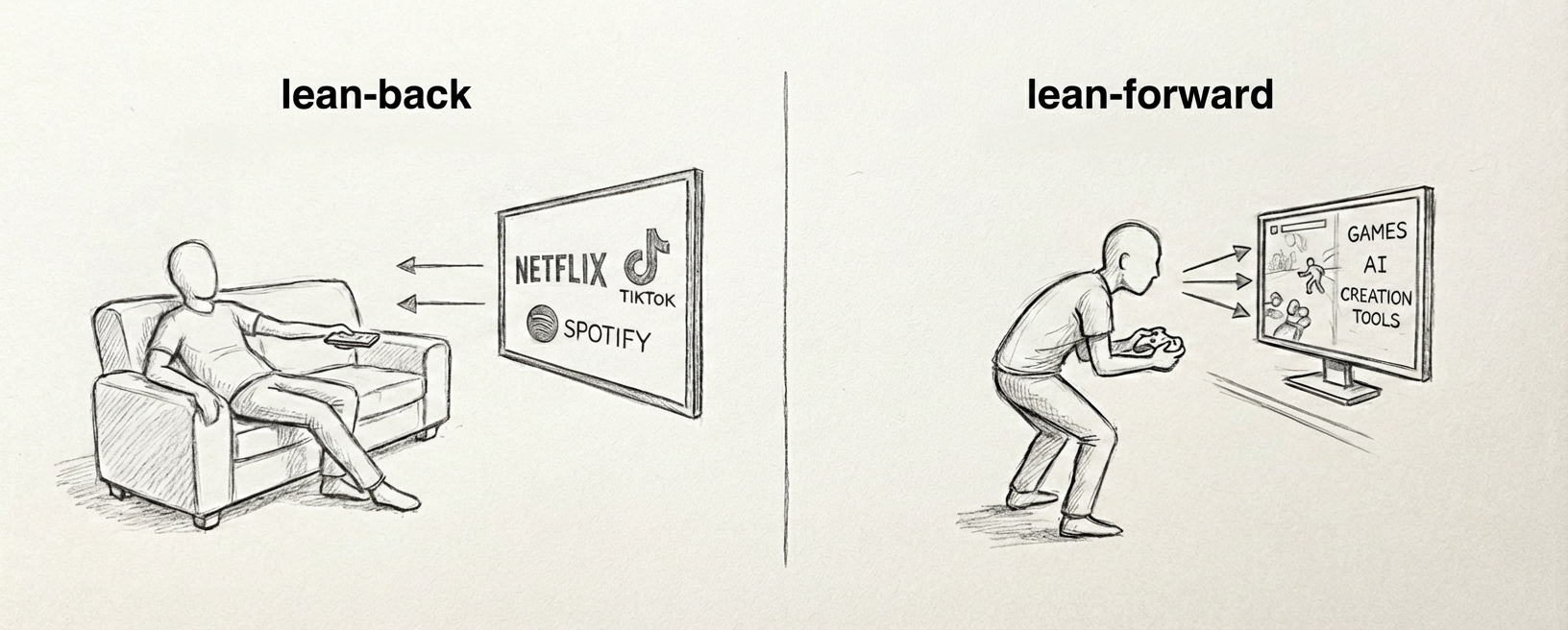
Reed Hastings, the co-founder of Netflix, pointed out that these two modes have very human roots. As kids, we either ask someone to read us a story (lean-back), or we ask them to play with us (lean-forward). Those instincts don’t go away, they just get packaged into different formats as we grow up.
With AI, those distinctions start to blur. And when they blur, the role of the audience changes.
Until now, most of the “intelligence” in entertainment has existed in the recommendation layer. Media platforms use data to decide what content to show you, but the underlying content itself is static.
If enough people on Netflix search for “Korean murder mystery” and there’s nothing that quite fits, eventually a show will get commissioned and added to the content library.
In an AI-first world, you don’t need a content library in the same way. The content itself is responsive. When you search for “Korean murder mystery”, you won’t get pointed towards a pre-existing show, instead you’ll have one created for you.
And you can influence how it unfolds. Maybe you prefer surprise endings and I prefer predictable ones. Instead of being recommended completely different shows, we’ll engage with the same story and shape how it unfolds in different ways.
We’re still early and there’s a psychological barrier when it comes to AI-generated content. There hasn’t been a breakout format that’s fully landed yet.
But the direction is clear. And the bigger shift isn’t just that content becomes dynamic. It’s that creation and consumption collapse into a singular experience.
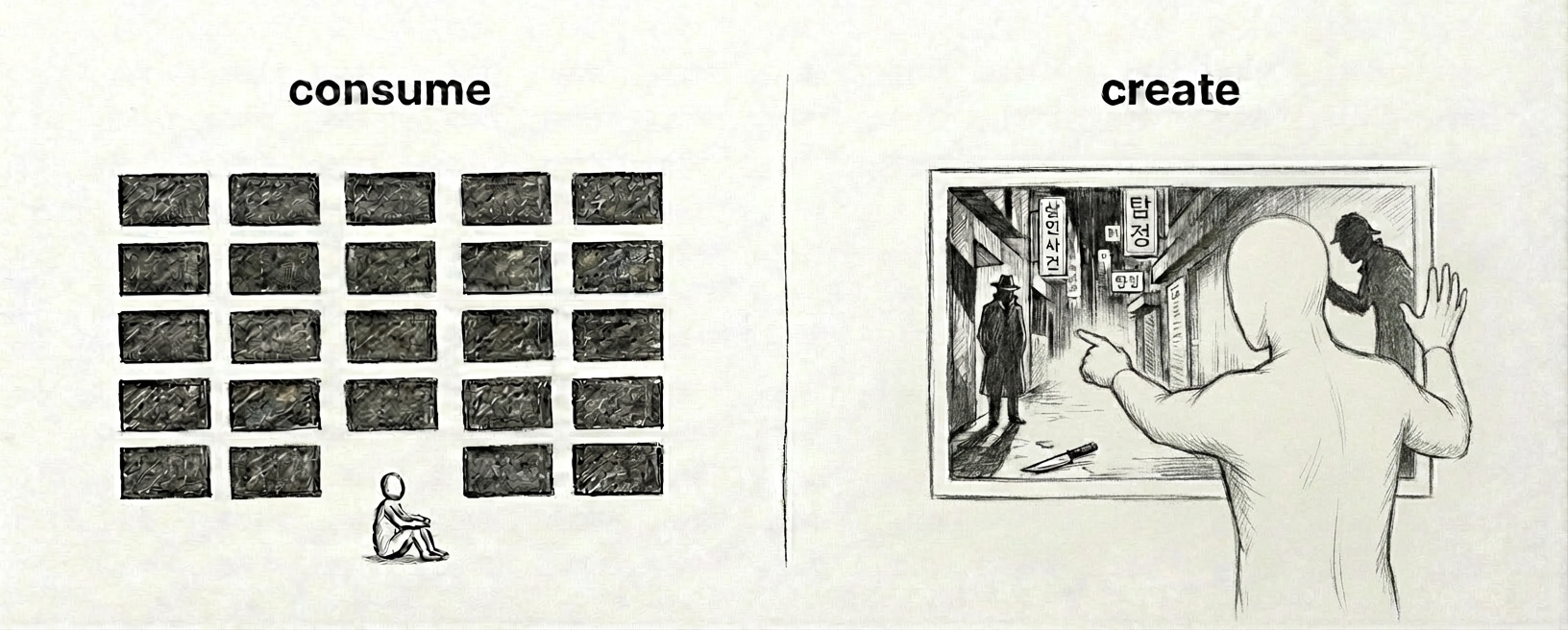
One of the most common criticisms of AI is that it’ll flood the world with low-quality “slop”. That might be true, but it also meaningfully lowers the barrier to creation. You no longer need formal training in filmmaking, music production, or design to bring an idea to life. If you have an idea, you can express it.
We see this with our own users. Our most engaged users spend more time creating than consuming. There’s something inherently engaging about the creation process. It’s lean-forward by default, and it turns entertainment from something you receive into something you shape.
For decades, mass entertainment has been produced by a small group of people and consumed by everyone else. AI flips that model on its head.
Stories will no longer just be told. They will be built. And we’re building for that world.
Small team, massive leverage, bleeding edge AI, real impact.